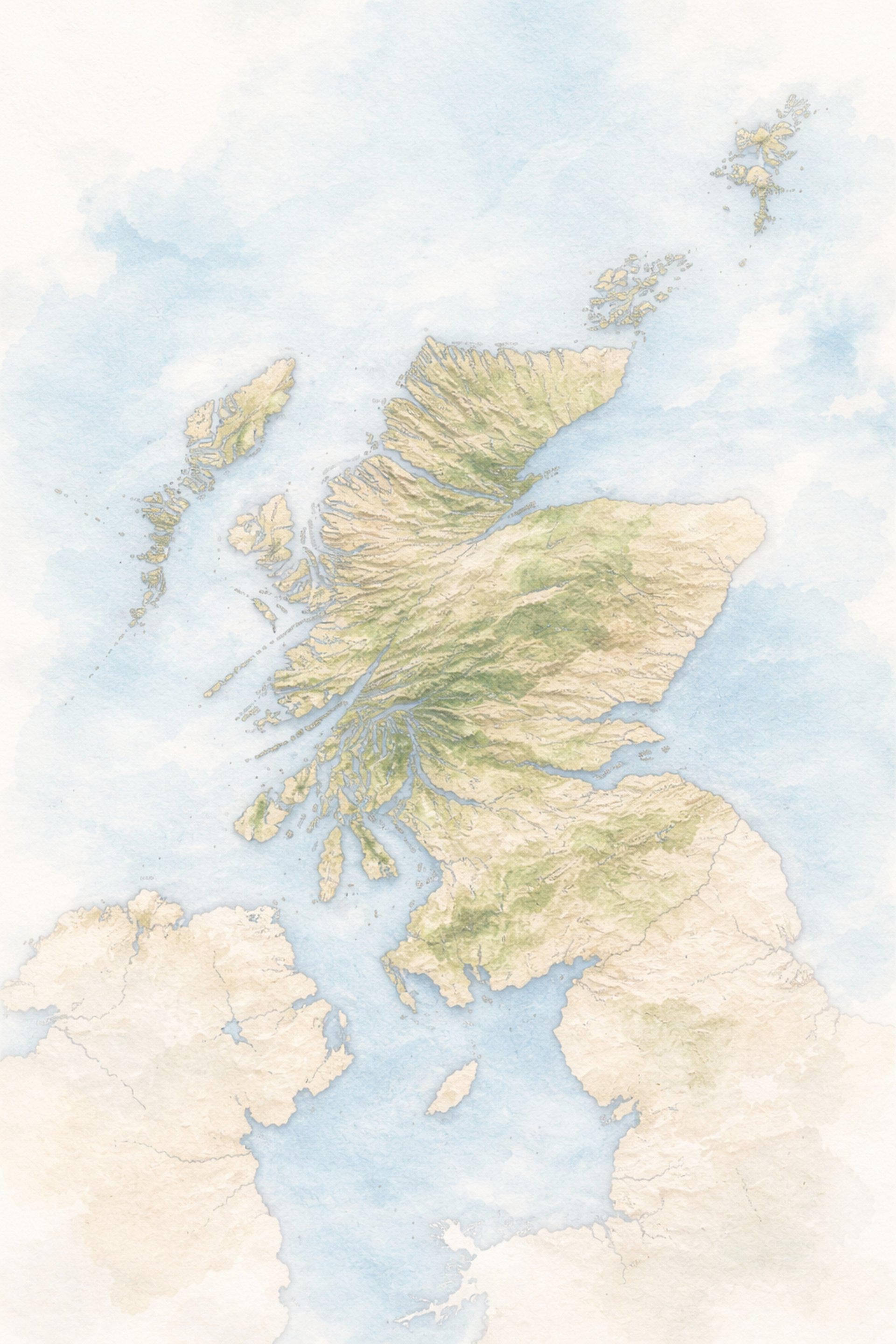
Hidden Gems
Explore Scotland’s secret spots, from misty highlands to quiet waterfalls.
Click a Location to View Details
Loch Lubnaig is a narrow, sheltered freshwater loch located between Callander and Strathyre in the heart of the Trossachs. Surrounded by steep, forested hills and calm, mirror-like water, it is one of the most scenic spots in the region, popular for walking, kayaking, and relaxing by the shore.
Fun Facts
• The name “Lubnaig” may come from Old Gaelic meaning “crooked lake,” referring to its long curved shape.
• Because the loch is protected from strong winds by the surrounding hills, the water is often extremely still—perfect for drone shots and reflections.
• Loch Lubnaig sits on the edge of the Loch Lomond & The Trossachs National Park and is one of the most accessible lochs from Edinburgh and Glasgow.
• It’s a favourite spot for wild swimming due to its clear water and easy access points.
Click the image to see the original video on TikTok
Parking:
Large paid car parks at both ends of the loch (pay & display).
Walk distance:
1–5 minutes depending on which viewing point you choose.
Difficulty:
⭐☆☆☆☆ (Easy)
Family-friendly:
Yes.
Notes:
Very easy access, toilets and picnic areas available.
St Conan’s Kirk is a beautiful church located on the banks of Loch Awe in Argyll, Scotland. Built in the late 19th century, it combines Gothic and Romanesque styles with striking stone arches and intricate woodwork. Surrounded by ancient trees and views of the loch, it’s one of Scotland’s most unique and peaceful landmarks, perfect for quiet reflection and photography.
Fun Facts
•The church was designed by Walter Douglas Campbell for his mother in honour of Saint Conan.
•It contains a small chapel dedicated to Robert the Bruce, said to hold a fragment of his bone.
•Each section of the building has a different architectural style, symbolising Scotland’s history.
•The Kirk is open to visitors year-round and is a popular stop on the route around Loch Awe.
Click the image to see the original video on TikTok
Parking:
Small free car park right next to the church.
Walk distance:
1 minute.
Difficulty:
⭐☆☆☆☆ (Easy)
Family-friendly:
Yes.
Notes:
Church interior has uneven floors; caution needed with small kids.
McCaig’s Tower is a beautiful stone monument located on Battery Hill, overlooking the seaside town of Oban in western Scotland. Built in the late 19th century by John Stuart McCaig, it combines classical and local architectural styles, with graceful arches and panoramic views across Oban Bay. Surrounded by peaceful gardens, it’s one of Scotland’s most iconic viewpoints, perfect for quiet reflection and photography.
Fun Facts
•The tower was designed by John Stuart McCaig as a memorial to his family and to provide work for local stonemasons.
•It was inspired by the Roman Colosseum, giving it the nickname “Oban’s Colosseum.”
•The interior was never finished, though McCaig planned statues of his relatives inside.
•The site is open to visitors year-round and offers stunning views of the town and nearby islands.
Click the image to see the original video on TikTok
Parking:
Free parking available on streets nearby; limited in peak times.
Walk distance:
2–5 minutes depending where you park.
Difficulty:
⭐⭐☆☆☆ (Easy–Moderate)
Family-friendly:
Yes.
Notes:
Steep road if coming from town centre..
Dunmore Park House is an abandoned 19th-century estate located near Airth in central Scotland. Once a grand country mansion surrounded by woodlands and landscaped gardens, it now stands as an atmospheric ruin wrapped in ivy. Though no longer inhabited, its dramatic architecture and quiet, haunting setting make it a favourite destination for explorers, photographers, and history lovers.
Fun Facts
•The mansion was built in the 1820s and expanded in the Victorian era with impressive towers and stonework.
•It was part of the Dunmore Estate, owned for centuries by the Earls of Dunmore.
•The house has been abandoned since the 1960s, leaving only the outer walls and staircase structures.
•Near the estate stands the famous Pineapple House, a unique 18th-century folly shaped like a giant stone pineapple.
Click the image to see the original video on TikTok
Parking:
Small informal parking area near the estate entrance.
Walk distance:
About 10–15 minutes on woodland paths.
Difficulty:
⭐⭐★☆☆ (Moderate)
Family-friendly:
Partially.
Notes:
Ruins are unstable; caution required.
Loch Ness is a large, deep freshwater loch located in the Scottish Highlands. Famous for its dark waters and mysterious legends, it stretches for over 23 miles, surrounded by dramatic hills and forests. Its atmospheric scenery makes it one of Scotland’s most iconic and visited natural landmarks.
Fun Facts
• Loch Ness is the second-largest loch by surface area, but holds more water than all lakes in England and Wales combined.
• The loch is best known for the legend of the Loch Ness Monster, first reported in the 6th century.
• Due to the peat in the water, visibility is very low, adding to the mystery surrounding the loch.
• Urquhart Castle, sitting along its shores, is one of the most photographed castles in Scotland.
Click the image to see the original video on TikTok
Parking:
Several free and paid car parks around the loch depending on viewpoint.
Walk distance:
1–10 minutes depending on spot.
Difficulty:
⭐☆☆☆☆ (Easy)
Family-friendly:
Yes.
Notes:
Very busy in summer.
Dunnottar Castle is a dramatic medieval fortress perched on a clifftop near Stonehaven in northeastern Scotland. Surrounded by steep cliffs and the crashing waves of the North Sea, it offers breathtaking views and a deep sense of history. The ruin is one of Scotland’s most iconic landmarks, drawing visitors for its rugged beauty, cinematic scenery, and fascinating past.
Fun Facts
•The castle dates back to the Early Middle Ages, though most surviving structures were built between the 14th and 16th centuries.
•It famously sheltered the Honours of Scotland (the Scottish Crown Jewels) during the 17th-century wars.
•Dunnottar’s remote, clifftop location made it almost impossible to capture, giving it a legendary reputation. The site has appeared in films and series, including “Hamlet” and “Mary Queen of Scots.”
Click the image to see the original video on TikTok
Parking:
Free dedicated car park at the top of the cliffs.
Walk distance:
10 minutes downhill to the castle.
Difficulty:
⭐⭐⭐☆☆ (Moderate)
Family-friendly:
Partially — steep steps.
Notes:
Very exposed to wind.
Crawford Priory is a historic ruined mansion located near Springfield in Fife, Scotland. Originally built in the early 19th century, it was later redesigned in a Gothic Revival style, giving it its dramatic towers and cathedral-like appearance. Abandoned since the mid-1900s, the priory now stands as a haunting yet captivating landmark, surrounded by woodland and rich wildlife. Its striking architecture and mysterious atmosphere make it a favourite location for photographers, explorers, and history lovers.
Fun Facts
•The estate was originally commissioned by Lady Mary Lindsay Crawford, who transformed it into a grand Gothic mansion.
•It was once home to an extensive collection of art, books, and rare historical documents.
•The building has been abandoned since the 1960s, leaving only its outer walls and iconic towers.
•Because of its dramatic architecture, it is often featured by urban explorers and in Scottish folklore discussions.
Click the image to see the original video on TikTok
Parking:
Informal lay-by parking close to the track.
Walk distance:
5–10 minutes on flat grass and paths.
Difficulty:
⭐⭐☆☆☆ (Easy–Moderate)
Family-friendly:
Partially — ruins not safe for small kids.
Pease Bay is a scenic coastal cove located in East Lothian, Scotland. Known for its golden beach, dramatic cliffs, and peaceful atmosphere, it’s a popular spot for surfers, walkers, and families. The bay’s natural beauty and wide, open shoreline make it a perfect place for relaxation, photography, and enjoying Scotland’s rugged coastline.
Fun Facts
•Pease Bay is one of Scotland’s top beginner surfing beaches, thanks to its gentle waves and sheltered shape.
•The surrounding cliffs are part of the ancient Siccar Point formation, famous for its geological significance and stunning coastal views.
•Pease Bay has appeared in several travel guides and nature programs, known for its unique blend of seaside calm and wild landscapes.
•The nearby Pease Bridge, built in 1786, was once the highest bridge in Britain.
Click the image to see the original video on TikTok
Parking:
Large paid car park near the beach.
Walk distance:
2–3 minutes.
Difficulty:
⭐☆☆☆☆ (Easy)
Family-friendly:
Yes.
Notes:
Popular surfing spot.
Corpach Shipwreck is a famous shipwreck located near Fort William in the Scottish Highlands, sitting on the shore where Loch Linnhe meets the open sea. Once a working fishing vessel, the MV Dayspring ran aground during a storm in 2011 and has remained there ever since. Set against dramatic views of Ben Nevis, the wreck has become an iconic landmark, attracting photographers, travellers, and maritime history enthusiasts from around the world.
Fun Facts
•The ship was originally built in the 1970s and spent decades working in Scottish waters before being grounded by severe weather.
•Its striking location beneath Ben Nevis makes it one of the most photographed shipwrecks in the UK.
•Over the years, the wreck has become a symbol of resilience and is often featured in travel guides about the Highlands.
•At low tide, visitors can walk directly up to the hull, while high tide creates dramatic reflections around the vessel.
Click the image to see the original video on TikTok
Parking:
Small free car park nearby.
Walk distance:
3–5 minutes on a gravel path.
Difficulty:
⭐☆☆☆☆ (Easy)
Family-friendly:
Yes.
Notes:
Best visited at low tide.
Loch Eck is a long, narrow freshwater loch located in the Cowal Peninsula within Argyll Forest Park. Surrounded by peaceful woodlands and rolling hills, it is known for its calm, mirror-like waters and scenic walking trails. Once a source of exceptionally pure drinking water, the loch remains one of the quietest and most beautiful natural spots in the region, attracting hikers, photographers, and nature lovers.
Fun Facts
•Loch Eck is one of the few lochs in Scotland home to the rare freshwater herring, known locally as powan.
•The loch’s sheltered, reflective waters make it a favourite location for sunrise and sunset photography.
•A historic Victorian-era hotel once stood on its shores, welcoming travellers exploring the Cowal Peninsula.
•Loch Eck sits within Argyll Forest Park, offering access to scenic trails, forests, and wildlife such as red deer and ospreys.
Click the image to see the original video on TikTok
Parking:
Lay-bys along the road; parking simple.
Walk distance:
1–5 minutes depending on viewpoint.
Difficulty:
⭐☆☆☆☆ (Easy)
Family-friendly:
Yes.
Notes:
Narrow roadside areas.
Loch Katrine is a long, freshwater loch located in the Trossachs of central Scotland. Surrounded by rolling hills, peaceful forests, and winding trails, it is one of the region’s most picturesque natural landmarks. Famous for inspiring Sir Walter Scott’s poem The Lady of the Lake, the loch has become a favourite spot for boat trips, scenic walks, and exploring the heart of the Scottish Highlands.
Fun Facts
•Loch Katrine has supplied fresh drinking water to Glasgow since the 1850s, thanks to one of the most ambitious Victorian engineering projects in Scotland. •
•The historic steamship Sir Walter Scott has been carrying passengers on the loch for over 120 years, offering classic scenic cruises.
•The area inspired several literary works, most famously Walter Scott’s The Lady of the Lake, which helped popularise the Highlands worldwide.
•Wildlife around Katrine includes red deer, otters, eagles, and rare plant species, making it a favourite location for photographers and nature lovers.
Click the image to see the original video on TikTok
Parking:
Large paid car park at Trossachs Pier.
Walk distance:
1–5 minutes.
Difficulty:
⭐☆☆☆☆ (Easy)
Family-friendly:
Yes.
Notes:
Boat trips available.
Loch an Eilein Castle is a picturesque island castle located in the heart of Rothiemurchus in the Cairngorms National Park. Surrounded by pine forests and calm reflective waters, it is considered one of the most enchanting historic sites in the Highlands. The ruined 13th-century fortress sits on a small island, creating a dramatic and peaceful atmosphere that attracts hikers, photographers, and nature lovers year-round.
Fun Facts
•The castle dates back to the 1200s and was originally built as a defensive stronghold to protect the area from raiders.
•During the 14th century, it served as a refuge for the Wolf of Badenoch, a powerful and feared Scottish noble.
•In the past, the water level was lower, allowing people to walk to the island; today the castle can only be reached by boat.
•Loch an Eilein has been voted one of Britain’s Best Picnic Spots and is a popular filming location thanks to its atmospheric scenery.
Click the image to see the original video on TikTok
Parking:
Paid car park at Rothiemurchus.
Walk distance:
10–15 minutes on a well-maintained path.
Difficulty:
⭐☆☆☆☆ (Easy)
Family-friendly:
Yes.
Notes:
One of the easiest scenic walks.
Pattack Falls is a beautiful waterfall located near Loch Laggan in the Highlands of Scotland. Surrounded by lush pine forests and rugged rocky cliffs, the falls create a dramatic and peaceful atmosphere. The flowing waters of the River Pattack carve their way through a narrow gorge, making this spot a favourite for photographers, hikers, and nature lovers. Its secluded setting and enchanting scenery make Pattack Falls one of the hidden natural gems of the Cairngorms region.
Fun Facts
•Pattack Falls sits along the River Pattack, which flows from Loch Pattack through deep woodland landscapes before reaching Loch Laggan.
•The area around the falls was once used for historic drove routes, where cattle were moved through the Highlands.
•The waterfall is known for its dramatic flow after rainfall, creating powerful cascades that attract many photographers.
•Pattack Falls has appeared in several nature documentaries, thanks to its untouched beauty and atmospheric surroundings.
Click the image to see the original video on TikTok
Parking:
Free car park right beside the trail.
Walk distance:
1–2 minutes.
Difficulty:
⭐☆☆☆☆ (Easy)
Family-friendly:
Yes, with caution near edges.
Notes:
Short walk with great views.
Fun Facts
•The reservoir is part of Scotland’s largest environmental restoration project, helping revive native woodland across the Trossachs.
•Its dam, built in the 1960s, supplies water to communities across central Scotland.
•Wildlife around the reservoir includes red deer, pine martens, golden eagles, and many rare bird species.
•The area offers scenic walking routes, including the popular Glen Finglas Loop.
Glen Finglas Reservoir is a scenic freshwater reservoir located in the Trossachs of central Scotland. Surrounded by rolling hills, forests, and peaceful hiking trails, it is a popular spot for walkers, photographers, and nature lovers. Known for its calm atmosphere and panoramic landscapes, the reservoir is one of the hidden gems of Loch Lomond & The Trossachs National Park.
Click the image to see the original video on TikTok
Parking:
Free car park at the visitor area.
Walk distance:
1–10 minutes depending on chosen viewpoint.
Difficulty:
⭐☆☆☆☆ to ⭐⭐☆☆☆ (Easy–Moderate)
Family-friendly:
Yes.
Notes:
Multiple walking routes.
Fun Facts
•The beach offers stunning views of Fidra Lighthouse, said to have inspired Robert Louis Stevenson’s Treasure Island.
•Yellowcraig sits within a protected nature reserve, home to coastal birds, dunes, and wildflower habitats.
•It is a popular filming location thanks to its dramatic coastline and open sandy spaces.
•A network of woodland and coastal trails around the beach makes it ideal for scenic walks and wildlife spotting.
Yellowcraig Beach is a scenic sandy beach located near North Berwick in East Lothian. Known for its wide shoreline, coastal dunes, and views of Fidra Island, it’s a favourite spot for walkers, families, and nature lovers. The peaceful atmosphere and beautiful landscapes make it perfect for relaxation, photography, and exploring Scotland’s rugged coastline.
Click the image to see the original video on TikTok
Parking:
Large paid car park.
Walk distance:
5 minutes through dunes.
Difficulty:
⭐☆☆☆☆ (Easy)
Family-friendly:
Yes.
Notes:
Very popular in summer.
Fun Facts
•The waterfall drops around 28 meters, creating one of the most impressive cascades in central Scotland.
•It is part of the River Endrick, which flows into Loch Lomond.
•Loup of Fintry is especially popular at sunset, when the cliffs glow with warm colours.
• The area was once a historic grazing route, with old paths still visible around the falls.
Loup of Fintry is a beautiful multi-tiered waterfall located near the village of Fintry in Stirlingshire. Set in the rolling Campsie Fells, it is known for its dramatic cascades and stunning views, especially after heavy rainfall. Its peaceful surroundings and striking scenery make it a favourite spot for photographers and nature lovers.
Click the image to see the original video on TikTok
Parking:
Small free lay-by near the falls.
Walk distance:
2–3 minutes downhill.
Difficulty:
⭐⭐☆☆☆ (Easy–Moderate)
Family-friendly:
Partially — slippery rocks.
Notes:
Best after rainfall.
Fun Facts
•Yester Castle was built in the 1200s by Hugo de Gifford, a nobleman later linked to Scottish legends of magic.
•The Goblin Ha’ is one of Scotland’s most unique medieval chambers, carved deep into the hillside.
•The castle was once part of a large estate that played a role in local conflicts during the Middle Ages.
•Its remote woodland setting has made it a popular location for folklore stories and atmospheric photography.
Yester Castle is a ruined medieval fortress hidden in the woods near Gifford in East Lothian. Built in the 13th century, it is known for its mysterious atmosphere, moss-covered stones, and deep woodland setting. The most famous feature is the underground Goblin Ha’, a vaulted chamber that adds to the site’s eerie charm. Today, the castle is a remote and peaceful spot enjoyed by hikers, photographers, and history lovers.
Click the image to see the original video on TikTok
Parking:
Very limited roadside parking near the forest track. Do not block access.
Walk distance:
About 2 miles (1 hour return) through woodland.
Difficulty:
⭐⭐⭐☆☆ (Moderate)
Family-friendly:
Partially — steep drops around the ruins.
Notes:
Paths muddy; navigation tricky.
Fun Facts
•The name “Bullers” may come from the Old French word meaning “boiling,” referring to the way waves crash and foam inside the collapsed cave.
•The site is home to thousands of seabirds in summer, including puffins, kittiwakes, guillemots, and razorbills.
•A narrow natural arch called the “Pot” connects the sea to the collapsed cave, creating dramatic echoes during rough seas.
•The nearby cliffs were once part of an old fishing route used by local communities along the North Sea.
Bullers of Buchan is a dramatic collapsed sea cave and cliff formation located near Cruden Bay on the northeast coast of Scotland. Known for its steep cliffs, roaring waves, and spectacular sea arch, it is one of the most striking natural landmarks in Aberdeenshire. The area is especially popular for coastal walks, wildlife spotting, and capturing powerful ocean scenery.
Click the image to see the original video on TikTok
Parking:
Free small car park near the cliff path.
Walk distance:
2–3 minutes.
Difficulty:
⭐⭐☆☆☆ (Easy–Moderate)
Family-friendly:
No — steep unprotected cliffs.
Notes:
Extreme caution required.
Fun Facts
•The castle was built by Clan MacLachlan, who controlled the surrounding lands for over 700 years.
•It was partially destroyed after the Jacobite Rising of 1745, when Clan MacLachlan supported Bonnie Prince Charlie.
•A short scenic path leads visitors along the shoreline directly to the ruins, offering beautiful views over Loch Fyne.
•Nearby stands the new Castle Lachlan, an 18th-century mansion that replaced the medieval fortress.
Old Castle Lachlan is a ruined 15th-century stronghold located on the shores of Loch Fyne in Argyll, Scotland. Surrounded by peaceful water, rolling hills, and coastal scenery, the castle offers a quiet and atmospheric glimpse into medieval Highland history. Its remote location and dramatic backdrop make it a favourite spot for photographers, walkers, and anyone exploring the Cowal Peninsula.
Click the image to see the original video on TikTok
Parking:
Free car park at Old Lachlan Pier.
Walk distance:
10–15 minutes along the shore.
Difficulty:
⭐⭐☆☆☆ (Easy–Moderate)
Family-friendly:
Yes.
Notes:
Beautiful quiet area.
Fun Facts
•Loch Bà means “Lake of the Cattle” in Gaelic, a name that reflects the area’s old pastoral history.
•The loch is part of one of Europe’s last remaining true wilderness areas — Rannoch Moor.
•It is a favourite spot for sunrise photography, thanks to its still waters and mountain reflections.
•The surrounding moorland is home to red deer, ptarmigan, and moorland birds, making it great for wildlife watching.
Loch Bà is a peaceful freshwater loch located on Rannoch Moor in the Highlands of Scotland. Surrounded by open moorland, distant mountains, and quiet wilderness, it offers a true sense of remoteness. The loch is popular among photographers, walkers, and nature lovers for its reflective waters and dramatic Highland scenery. It is also known as one of the best places to experience the untouched beauty of Rannoch Moor.
Click the image to see the original video on TikTok
Parking:
Roadside lay-bys along A85.
Walk distance:
1–5 minutes.
Difficulty:
⭐☆☆☆☆ (Easy)
Family-friendly:
Yes.
Notes:
Peaceful scenic spot.
Fun Facts
•Loch Rannoch sits on the edge of Rannoch Moor, one of Europe’s last great wilderness areas.
•The name “Rannoch” may come from Gaelic meaning “bracken-covered place.”
•The area is known for stunning sunrise reflections on calm days.
•Rannoch Moor is home to red deer, ptarmigan, and rare moorland birds.
Loch Rannoch is a peaceful freshwater loch located on Rannoch Moor in the Scottish Highlands. Surrounded by open moorland, distant mountains, and quiet wilderness, it offers a true sense of remoteness. The loch is popular for photography, hiking, and enjoying the dramatic Highland scenery.
Click the image to see the original video on TikTok
Parking:
Several lay-bys and small free car parks.
Walk distance:
1–5 minutes.
Difficulty:
⭐☆☆☆☆ (Easy)
Family-friendly:
Yes.
Notes:
Quiet even in summer.
Fun Facts
•The castle dates back to the late 14th century and was originally built by the influential Crichton family.
•It features a rare Italian-inspired diamond-faceted façade, added in the 1580s — one of the most unique architectural features in Scotland.
•Mary, Queen of Scots reportedly visited Crichton Castle during her reign.
•The castle’s remote setting makes it a popular spot for film productions, drone shots, and peaceful countryside walks.
Crichton Castle is a ruined medieval fortress located near the village of Crichton in Midlothian, Scotland. Overlooking the River Tyne, the castle is known for its dramatic hillside position and unique Renaissance-style courtyard façade. Once home to the powerful Crichton family, it now stands as a quiet, atmospheric historic site loved by hikers, photographers, and history enthusiasts.
Click the image to see the original video on TikTok
Parking:
Free car park at the end of the road.
Walk distance:
5–7 minutes uphill.
Difficulty:
⭐⭐☆☆☆ (Easy–Moderate)
Family-friendly:
Yes.
Notes:
Open views across the valley.
Fun Facts
•Loch Shiel is one of Scotland’s longest lochs, stretching over 17 miles from Glenfinnan to Acharacle.
•It served as a filming location for the Harry Potter movies, often shown as part of the route to Hogwarts.
•The area is rich in wildlife, including golden eagles, red deer, osprey, and rare Highland bird species.
•Glenfinnan at the north end of the loch is where Bonnie Prince Charlie raised the Jacobite standard in 1745.
Loch Shiel is a long, tranquil freshwater loch located in the West Highlands of Scotland. Surrounded by rugged hills, quiet shorelines, and dramatic Highland scenery, it is one of the region’s most peaceful natural landmarks. The loch is popular with photographers, hikers, and travellers seeking remote landscapes and breathtaking views, especially at sunrise and sunset.
Click the image to see the original video on TikTok
Parking:
Free car park near Glenfinnan Monument.
Walk distance:
2–5 minutes to viewpoints.
Difficulty:
⭐☆☆☆☆ (Easy)
Family-friendly:
Yes.
Notes:
Can be crowded.
Fun Facts
•The caves are formed from red sandstone, which gives the cliffs their distinctive warm colour during sunrise and sunset.
•Powerful waves continue to erode and reshape the caves each year, slowly changing their size and shape.
•The area is home to seabirds such as kittiwakes and fulmars, often seen nesting along the cliff edges.
•At low tide, visitors can explore hidden rock formations and tidal pools filled with marine life.
Cailpie Caves are striking sea-carved caves located along the dramatic cliffs near the village of Cailpie on Scotland’s northeast coast. Shaped over thousands of years by powerful waves and coastal winds, the caves create a rugged, atmospheric landscape. Their red stone walls and natural arches make them a favourite spot for coastal walkers, photographers, and anyone exploring Scotland’s wild shoreline.
Click the image to see the original video on TikTok
Parking:
Free parking in Crail; no parking at the caves.
Walk distance:
40–50 minutes coastal walk (2 miles).
Difficulty:
⭐⭐⭐☆☆ (Moderate)
Family-friendly:
Partially — uneven rocks.
Notes:
Beautiful coastal route.
Fun Facts
•Slains Castle is said to have inspired Bram Stoker’s Dracula after he visited the area in 1895.
•The castle was originally built in the 16th century and later expanded into a grand mansion overlooking the sea.
•Strong coastal winds and storms have caused parts of the castle to collapse into the cliffs over time.
•It’s a popular filming and photography spot thanks to its dramatic sea views and rugged atmosphere.
Slains Castle is a dramatic clifftop ruin located near Cruden Bay on Scotland’s northeast coast. Overlooking the North Sea from high, rugged cliffs, the castle offers one of the most atmospheric views in Aberdeenshire. Its striking location and haunting appearance have inspired writers, photographers, and hikers exploring Scotland’s wild shoreline.
Click the image to see the original video on TikTok
Parking:
Free small car park near the entrance.
Walk distance:
5 minutes.
Difficulty:
⭐☆☆☆☆ (Easy)
Family-friendly:
Partially — clifftop edges.
Notes:
Very windy on most days.
Fun Facts
•Loch Doon Castle was originally built in the 13th century on an island in the middle of the loch before being moved stone-by-stone to the shore in the 1930s.
•The castle may have connections to Robert the Bruce, who used the surrounding area during his early campaigns.
•Its unusual 11-sided design makes it one of the most distinctive medieval fortresses in Scotland.
•The surrounding area is part of a Dark Sky Park, making it a popular place for night-sky photography and stargazing.
Loch Doon Castle is a ruined medieval fortress located on a small peninsula at the southern end of Loch Doon in Ayrshire, Scotland. Once guarding the surrounding hills and remote waterways, the castle played an important role in regional defense during the Middle Ages. Today, its rugged stones, peaceful setting, and views across the loch make it a favourite spot for walkers, photographers, and anyone exploring the quiet landscapes of Galloway Forest Park.
Click the image to see the original video on TikTok
Parking:
Free car parking near the loch.
Walk distance:
1–5 minutes.
Difficulty:
⭐☆☆☆☆ (Easy)
Family-friendly:
Yes.
Notes:
Quiet scenic area.
Fun Facts
• Often called Scotland’s natural sapphire pools due to their clarity.
• A popular destination for cold-water swimmers — temperatures stay icy even in summer.
• Featured in several travel documentaries promoting the Isle of Skye.
• On sunny days, the pools reflect the Cuillin Ridge like a mirror.
Fairy Pools are a series of crystal-clear waterfalls and deep blue pools lying at the base of the Black Cuillin mountains on the Isle of Skye. Known for their magical colours and wild scenery, they attract hikers, swimmers, and photographers throughout the year. The path follows a scenic valley with flowing streams and rugged peaks towering above. Even on misty days, the pools show a distinctive turquoise glow.
Click the image to see the original video on TikTok
Parking:
Paid gravel car park at Glen Brittle. Fills up early in peak season.
Walk distance:
Approx. 1.5 miles (round trip) with some stepping-stones across streams.
Difficulty:
⭐⭐⭐☆☆ (Moderate)
Uneven ground and water crossings — good footwear recommended.
Family-friendly:
Partially — fine for older children; younger ones need supervision near water.
Notes:
Weather changes rapidly in the Cuillin. Pools are extremely cold, even in summer.
Fun Facts
• The glen was once an industrial hub, powering several wool and textile mills.
• Local volunteers restored the walking paths after decades of abandonment.
• Features multiple small waterfalls hidden between narrow rock walls.
• The upper section leads toward the dramatic Silver Glen and old mine remnants.
Alva Glen is a steep, narrow gorge tucked into the Ochil Hills, known for its cascading waterfalls, moss-covered cliffs, and lush woodland. The trail winds through dramatic rock formations and follows the burn as it drops through a series of deep pools and small falls. Once home to historic mills, the glen is now a peaceful walking route offering a mix of nature, history, and rugged scenery.
Click the image to see the original video on TikTok
Parking:
Free car park in Alva near the start of the trail.
Walk distance:
Approx. 1 mile to the upper bridges and back (can be extended further into the Ochils).
Difficulty:
⭐⭐⭐☆☆ (Moderate)
Some steep sections and narrow paths; can be muddy after rain.
Family-friendly:
Yes, for most families — caution needed near drops and wet edges.
Notes:
Paths can become slippery in wet weather. Water levels rise quickly after heavy rain.
Fun Facts
• Built around 1774 as an astronomical observatory for James Stuart-Mackenzie.
• Fell into disrepair in the 20th century before being restored to prevent collapse.
• On clear days you can see the Sidlaw Hills, Dundee, and even the North Sea.
• The tower is often photographed at sunrise due to its elevated position.
Kinpurney Tower stands on the summit of Kinpurney Hill near the village of Newtyle, offering wide panoramic views over the Vale of Strathmore. Built in the 18th century as an observatory, the tower has become a well-known local landmark visible from miles around. The short but steep walk to the top passes through farmland and open hillside before reaching the restored stone tower at the summit.
Click the image to see the original video on TikTok
Parking:
Small parking area near Newtyle at the start of the hill path.
Walk distance:
Approx. 1.2 miles to the summit (2.4 miles return).
Difficulty:
⭐⭐⭐☆☆ (Moderate)
Steep ascent in places but straightforward; can be muddy after rain.
Family-friendly:
Yes, for families used to hillwalking — steep but manageable.
Notes:
Very exposed at the top; strong winds are common. Wear sturdy shoes for the climb.
Fun Facts
• Once the seat of the powerful MacDonell clan who controlled the Great Glen region.
• The castle was damaged multiple times during 17th- and 18th-century conflicts.
• Its tall stair-tower remains one of the most recognisable features of the ruin.
• Located within the grounds of a historic Highland estate near Loch Oich.
Invergarry Castle stands on the wooded slopes above Loch Oich, once serving as the stronghold of the Clan MacDonell of Glengarry. The ruined tower house rises dramatically from the trees, offering a striking glimpse into Highland clan history. Although partially destroyed after the Jacobite uprisings, its tall, broken walls still dominate the landscape and give a powerful sense of the past.
Click the image to see the original video on TikTok
Parking:
Small parking area directly beside the castle, just off the estate road. Very convenient and only a few steps from the ruins.
Walk distance:
A few yards — the castle is right next to the parking spot.
Difficulty:
⭐☆☆☆☆ (Easy)
Flat and short; suitable for everyone.
Family-friendly:
Yes — quick and easy access, but supervise children near steep edges and loose stones.
Notes:
Castle interior is inaccessible; viewing is from the outside. Ground can be uneven around the ruins.
Fun Facts
• Built around 1760 as a bathing house for Lady Janet Anstruther of Elie House.
• Villagers were once asked to leave the nearby beach when she came to swim.
• The tower was restored in the 2000s after storm damage and erosion.
• A favourite photography spot due to its position on the clifftop.
Lady’s Tower stands dramatically above the rocky coastline of Elie in Fife, offering wide views over the Firth of Forth. Built in the 18th century as a private bathing retreat for Lady Janet Anstruther, the small stone tower sits on an exposed headland surrounded by cliffs, waves, and open sea air. Today it’s a popular scenic stop on the coastal path, especially at sunrise and sunset.
Click the image to see the original video on TikTok
Parking:
Ruby Bay car park — paid during the day for cars (first 2 hours free, then charges apply).
Campervans/motorhomes: paid overnight, designated bays available.
Walk distance:
Approx. 400 yards along the coastal path — easy and mostly flat.
Difficulty:
⭐☆☆☆☆ (Easy)
Simple path, though exposed to wind.
Family-friendly:
Yes — easy walk; children should be supervised near cliffs.
Notes:
Very windy location; avoid cliff edges during storms or high waves. Best visited around sunrise or sunset.
Fun Facts
• Considered one of the earliest stone castles in Scotland, dating back to the 1100s.
• Passed between several powerful families, including the MacSweens and the Campbells.
• The castle once controlled sea routes along Loch Sween and the nearby islands.
• Today it sits beside a modern holiday park, giving a strange mix of ancient and modern.
Castle Sween is one of the oldest stone castles in Scotland, standing on the shore of Loch Sween in Argyll. Built in the 12th century, the fortress overlooks a quiet stretch of coastline surrounded by rugged hills and sheltered bays. Although partly ruined, its curtain walls and towers still outline the original stronghold, offering a dramatic window into Scotland’s medieval past.
Click the image to see the original video on TikTok
Parking:
No visitor parking at the castle itself. Park in the signed lay-by before the holiday park entrance, then walk down the private estate road to the castle (access on foot only).
Walk distance:
Approx. 1 mile each way (20–30 minutes downhill to the castle, slightly longer back up).
Difficulty:
⭐⭐☆☆☆ (Easy–Moderate)
Gentle but steady slope; path is straightforward but can feel tiring on the way back uphill.
Family-friendly:
Yes, for families used to short walks — children should be supervised near walls and drops.
Notes:
The route passes through a private holiday park — stay on the main track and respect residents. The site is exposed to wind from the loch and can be muddy after rain.
Hidden Gems
Scotland's secret spots, waiting for you.
FAQs
What is this page?
It’s a collection of hidden spots across Scotland, organized for easy browsing.
How are places organized?
Locations are grouped by regions like Highlands, Islands, Castles, and Waterfalls.
Can I view this on my phone?
Yes, the page is designed to work smoothly on mobile devices with easy scrolling.
Are photos included?
Each place has space reserved for a photo to help you visualize it.
Where do links lead?
Links take you to TikTok videos showing the locations in action.
Can I suggest a hidden location?
Suggestions are welcome! Reach out through the contact page to share your favorite spots.
Get in Touch
Questions or suggestions? Reach out anytime—we’d love to hear from you.